
Inflation is not a gentle storm. It doesn’t warn you. It doesn’t wait. It simply arrives, stretches your budget, and forces adjustment whether you’re ready or not.
And the people who feel it first and hardest are employees.
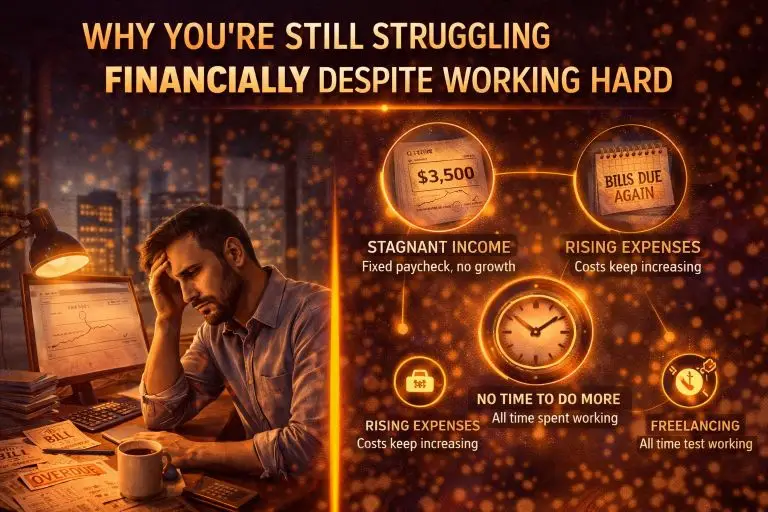
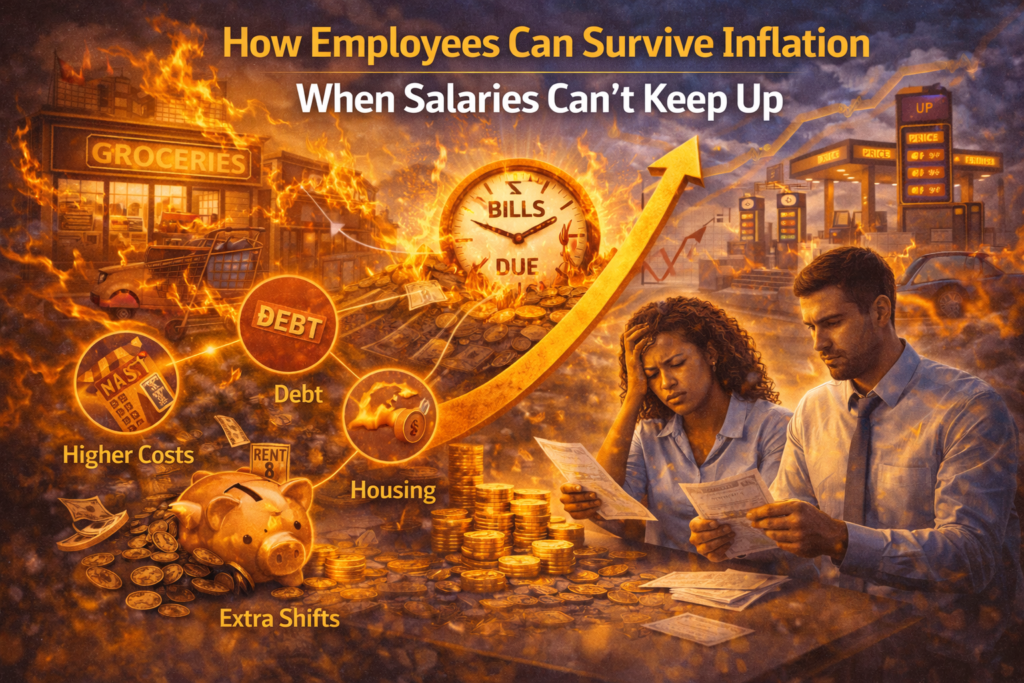
Why? Inflation rises fast and salaries rise slowly—if they rise at all. That gap is where stress, anxiety, and financial pressure live.
To make this real, let’s follow one person many employees will recognize themselves in. Meet Tunde, an accountant earning ₦250,000 monthly.
Through Tunde’s story, you’ll understand how employees can survive inflation, why salary alone isn’t enough, and what actually works.
Why Salary Alone Cannot Protect Employees From Inflation
Tunde noticed it quietly at first:
- Transport costs increased
- Food prices climbed
- Bills rose
- Rent followed
Inflation had already moved.
Months later, his employer announced a 10% salary increase. It sounded good—until he did the math.
- Inflation rate: 25%
- Salary increase: 10%
He earned more on paper, but his purchasing power dropped.
The truth: A salary provides stability, not protection.
Employers move slowly because they must balance: Profit, Cash flow, Sustainability. But inflation adjusts instantly.
This is why employees who depend on salary alone always fall behind inflation.
Why Certificates Alone Don’t Help Employees Survive Inflation
Feeling the pressure, Tunde tried another common solution: professional certifications. He studied and passed. Then he submitted the certificate and then waited.
The result? Maybe a small raise, Maybe no change but definitely no immediate relief
Certificates:
- Improve credibility
- Enhance knowledge
- Strengthen your CV
But they don’t guarantee income growth. Unless a certification directly increases your market value, it won’t protect you from inflation.
Tunde realized something important: Knowledge without monetization does not fight inflation.
The Side Hustle Myth: Why Most Employees Choose the Wrong One
Like many employees trying to survive inflation, Tunde turned to a side hustle. He chose perfume sales.
Why? “Everyone is doing it.”
Within three months:
- Customers stressed him
- Deliveries drained him
- Margins were thin
Motivation collapsed and He quit.
Not because side hustles don’t work but because the wrong side hustle creates burnout.
Perfume sales favor people with:
- Strong sales energy
- Social influence
- Marketing interest
Tunde was analytical, introverted, and process-driven. The hustle didn’t fit him.
How Employees Can Survive Inflation by Selling What They Already Know
This is where everything changed.
Tunde posted a simple message online: “If you run a small business and need help with bookkeeping, budgeting, or monthly reports, send me a message.”
Within 48 hours:
- 5 inquiries
- 3 paying clients
- ₦30,000 per client monthly
He nearly doubled his income without learning anything new.
Why it worked:
- He monetized an existing skill
- He solved a real problem
- He removed stress from the process
The easiest way employees can survive inflation is by monetizing what they already know.
Your employer pays you because your skills have value. Others will pay too.
Employees Have More Monetizable Skills Than They Realize
Many employees say:
“I don’t have skills outside my job.” That’s rarely true.
Your job already trained you in:
- Communication
- Analysis
- Reporting
- Customer handling
- Time management
- Problem-solving
- Tools and systems
You just use them internally. The moment those skills move outside your workplace, they become income-producing assets.
You don’t lack skills. You lack skill visibility and monetization.
The Real Reason Most Employees Fail at Side Hustles
Side hustles fail when employees:
- Copy trends blindly
- Choose stress-heavy models
- Expect fast money
- Ignore personality fit
- Build without systems
Tunde didn’t fail because perfume sales don’t work. He failed because it didn’t match who he is.
The Employee Framework for Surviving Inflation
To survive inflation sustainably, your side income must align with:
- What you already know
- What people will pay for
- Low stress execution
- Your available time
- Your personality
For Tunde, that meant:
- Bookkeeping services
- Excel training
- Budgeting templates
- Financial coaching
When a side hustle fits you, it feels natural and not draining.
How Employees Can Use Company Training to Beat Inflation
Tunde’s employer paid for training in:
- Advanced Excel
- Financial modeling
- Budgeting systems
Previously, those skills stayed inside the company.
Now, he uses them to:
- Train SMEs
- Sell templates
- Offer consulting sessions
Company training is hidden capital if you use it beyond your job.
Conclusion: How Employees Can Survive Inflation Long-Term
Inflation is not slowing down. And salaries will never chase it fast enough.
Jobs can sustain you. But they cannot protect you.
Employees who survive inflation:
- Monetize existing skills
- Build income beyond salary
- Choose aligned side hustles
- Think like value creators
You don’t need to quit your job. You need to outgrow its limitations.
Inflation punishes dependence. It rewards adaptability. And now, you know how to adapt.