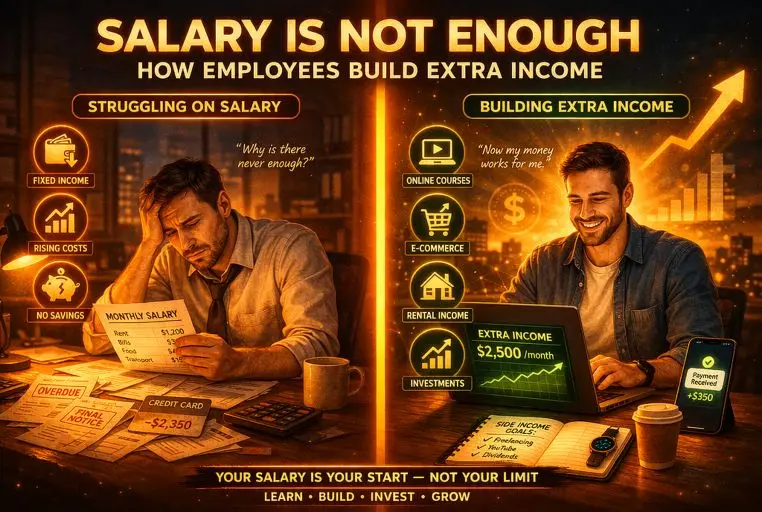


You did what you were told, you learned a skill, you invested time, you sacrificed comfort, you pushed through stress, frustration, and long nights. You practiced until you were good and sometimes very good.
Because growing up, most of us heard the same promise: “Learn a skill and you’ll never be broke.”
- Parents believed it.
- Teachers repeated it.
- Society reinforced it.
And for a long time, it worked. So you believed it too. But then something confusing happened; You became skilled… and the money still didn’t come.
- Clients were inconsistent.
- Gigs were scarce.
- People praised your talent but hesitated to pay.
- Some wanted discounts.
- Others expected free work.
And a quiet question formed: If I’m good at what I do, why isn’t my life improving?
This is where most skilled people misunderstand the problem.
You Don’t Have a Skill Problem You Have a Market Problem
The issue is not that you’re not good enough. The issue is that you were taught only half of the truth.
In the past: Skills were scarce, markets were local and competition was limited. If you were good, people found you. That world no longer exists.
Today: Skills are everywhere, competition is now global and Attention is fragmented.
The market no longer pays for effort or talent by default. It pays for what it can see, understand, trust, and clearly position. That’s why many talented people stay broke. Not because they lack ability, but because they rely on skill alone in a market that no longer rewards skill alone.
Why Skill Alone No Longer Pays
Skill is no longer the deciding factor but the entry ticket. Once you have the skill, the market asks different questions:
Who is this for?
- Why should I choose you?
- What makes you different?
- Can I trust you?
- Do you understand my problem?
If these questions aren’t answered clearly, the market moves on even if your work is excellent.
This is not a motivation problem. It’s an orientation problem.
Identity: Why “I Do X” Is Not Enough
Most people define themselves by their skill:
- “I bake cakes.”
- “I design graphics.”
- “I do hair.”
- “I write.”
But everyone else says the same thing.
The market doesn’t pay for labels. It pays for meaning, relevance, and clarity.
Your identity is not what you do but how your skill lives in the customer’s mind.
Example: A baker creates cakes that:
- Taste great
- Use nutritious ingredients
- Avoid artificial preservatives
The downside?
They don’t last long without refrigeration.
If this baker sells in a market where cakes sit unrefrigerated for days, failure is guaranteed not because the product is bad, but because the market doesn’t fit the product.
Move the same cake to:
- Homes with refrigerators
- Health-conscious families
- Events
- Premium buyers
And suddenly, the same skill becomes profitable. Nothing changed except positioning.
Difference: Why the Market Pays for Meaning, Not Effort
People don’t pay for:
- How hard you worked
- How long you practiced
- How much you suffered
They pay for what your skill represents to them.
Everyone designs but not everyone designs for brands that want to look premium and trustworthy. Everyone writes but not everyone writes to turn confused readers into confident buyers.
Your difference is the bridge between your skill and the customer’s problem. When that bridge is clear, selling stops feeling like persuasion and starts feeling like alignment.
Connection: Why Talent Dies Quietly Without Visibility
A diamond hidden in a dark room is still a diamond.
- But nobody sees it.
- Nobody values it.
- Nobody buys it.
Visibility is not noise. It is presence.
If people don’t regularly see you, hear you, or understand what you stand for, they won’t remember you when they need what you offer.
The market pays: Familiar face, clear voices and consistent presence. Talent without visibility stays underpaid.
Value Perception: Why Hard Work Does Not Set Prices
Many skilled people price emotionally. They think about:
- Their stress
- Their sacrifices
- The years they spent learning
The market sees none of that. The market pays based on perceived value.
Perception is shaped by:
- How you present your work
- How clearly you communicate outcomes
- How confidently you position yourself
- How consistently you show results
Your brand sets the price before the conversation begins.
Your skill delivers value and your brand explains it.
Targeting: Why the Right Customer Changes Everything
Not every customer is meant for you. Some people only want cheap things; others want quality, safety, status, or peace of mind.
When you try to serve everyone:
- Your message weakens
- Price fights increase
- Frustration grows
When you focus on the right customer:
- Selling feels natural
- Prices feel fair
- Loyalty increases
Conversion: When Selling Becomes Simple
When:
- Your identity is clear
- Your difference is understood
- Your connection is strong
- Your target is right
Selling becomes straightforward.
You state the offer, you state the price and you state the value. Then right people buy and they wrong people walk away. This is exactly how it should be.
The Truth about Skills and Money
Skills still matter. But skills alone no longer decide income.
Your skill is the engine but positioning, visibility, connection, and trust are the fuel. And without fuel, the engine doesn’t move. With the right fuel, the same engine goes much farther than you imagined.
You don’t need to change your skill. You need to change how the market meets it.
If you’re skilled but underpaid, the issue isn’t talent. It’s positioning.