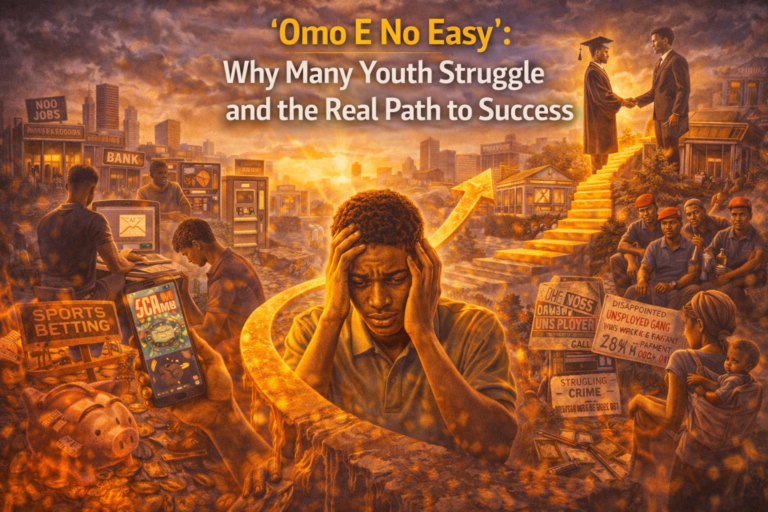

We’ve already talked about earning with the little you know not waiting until you’ve completed an entire course before you start making money.
That mindset helps people begin earlier. It helps them generate income, support themselves, and even fund the rest of their training.
It gives opportunities to those who cannot afford to finish at once. It creates momentum.
But this conversation is different. This is not about earning while learning.
This is about the people who start… and never finish.
There are different types of learners:
- Those who keep learning while they earn.
- Those who keep learning even without earning.
- Those who pause with the intention to return.
- And those who quit completely — and never look back.
The real question is simple: Why didn’t you complete it?
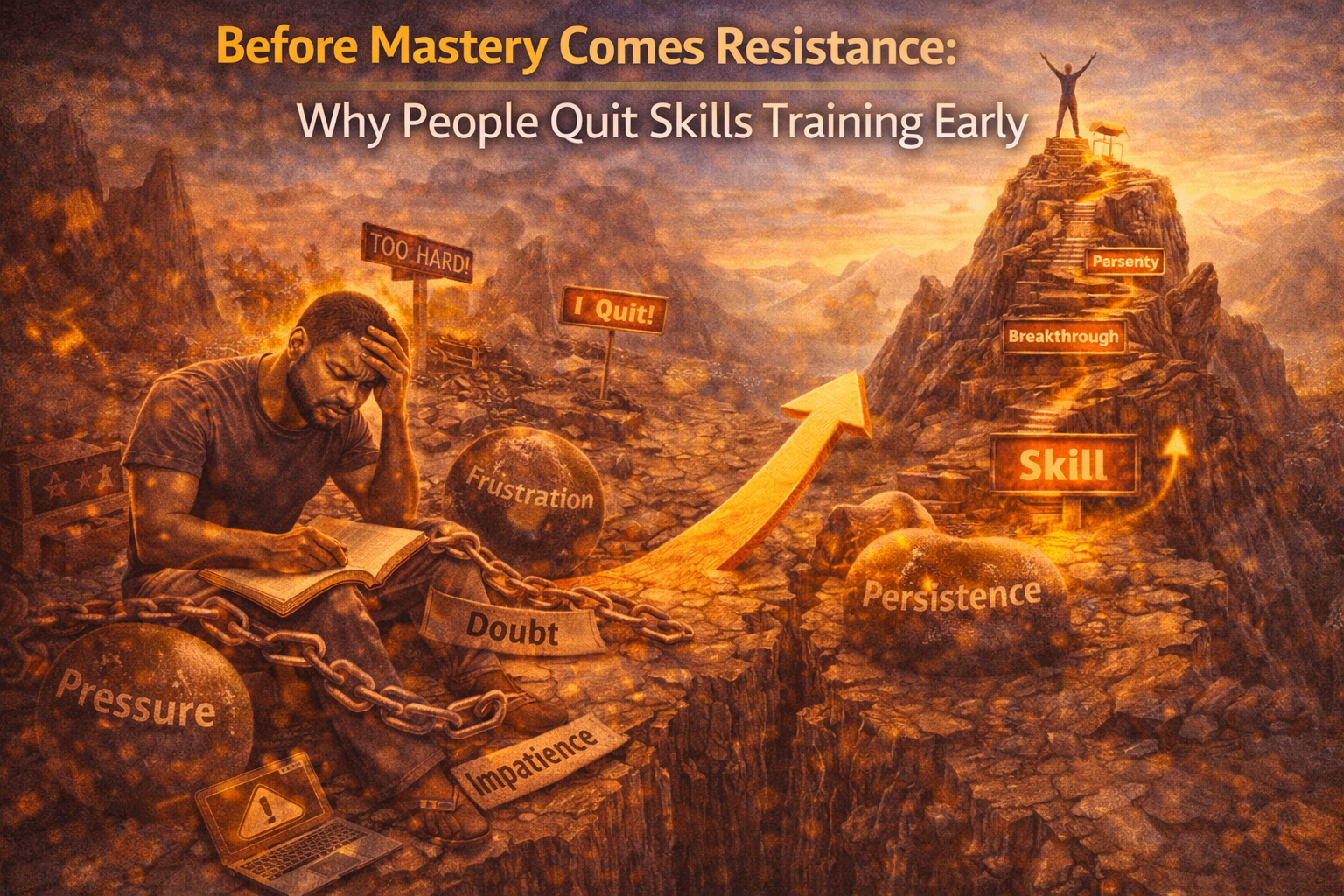
Because quitting before mastery is not random. It is usually a result of specific pressures, internal battles, or structural problems. If we understand them deeply, we can correct them.
Let’s break them down.
1. Lack of Financial Resources
One of the most common reasons people stop learning a skill is financial pressure.
They start with excitement. They pay for the first phase of the course. They complete the beginner level. Then something happens:
- Funds run out.
- A sponsor withdraws support.
- Family responsibilities increase.
- Tools or materials become too expensive.
- Income becomes unstable.
So they pause. But that pause stretches into months and then years. And slowly, what was once a dream becomes something they “used to do.”
The Deeper Problem
The real issue is not just lack of money. It is the absence of a financial strategy attached to learning.
Many people treat learning as a one-time expense instead of a staged investment. They plan how to start but not how to sustain.
What to do instead
First, adopt a cycle: Learn → Apply → Earn → Reinvest.
Do not wait until you “finish everything” before you begin earning. Even beginner-level knowledge can solve small problems:
- A beginner designer can create social media graphics.
- A junior web developer can build simple landing pages.
- A beginner video editor can edit short-form content.
- A basic digital marketer can manage small campaigns.
Second, choose modular learning where possible. Instead of one massive payment, look for structured phases.
Third, build a small completion fund. Even if it takes time to gather, planning for completion increases the chances that you will finish.
Financial pressure can interrupt your journey but strategic earning can restart it.
2. Conflict with Mentors, Bosses, or Instructors
Some people don’t quit because of money. They quit because of people.
Conflicts with trainers, apprenticeship bosses, or instructors can drain motivation. Sometimes the environment becomes emotionally exhausting:
- Disrespect.
- Poor communication.
- Favoritism.
- Exploitation disguised as “training.”
- Lack of support.
When they environment becomes toxic, quitting feels like protection.
The Deeper Problem
There are two common mistakes here:
1. Confusing strict training with toxicity.
2. Leaving the skill entirely because of one individual.
Growth is uncomfortable. A good mentor may push you hard. But toxicity belittles you, breaks confidence, and creates fear instead of competence.
What to do instead
First, separate the person from the skill. If the instructor is the problem, do not abandon the craft.
Second, expand your learning sources. Today, knowledge is not controlled by one teacher. You can learn from communities, books, peer groups, alternative mentors, and real-world practice.
Third, develop independent learning discipline. The stronger your self-learning ability, the less dependent you are on one environment.
Do not allow a temporary human conflict to permanently end your skill development.
3. Incomplete Courses or Inexperienced Teachers
Another silent reason people quit is disappointment.
They pay for a course expecting depth and structure. Instead, they receive:
- Surface-level explanations.
- Outdated content.
- No practical projects.
- No real-world application.
- Missing advanced components.
When learners notice gaps, discouragement sets in. They feel cheated. They lose trust in the process and they stop.
The Deeper Problem
Many people assume that payment guarantees quality. But not all courses are created by experienced professionals. Some are built by individuals who are still beginners themselves.
So the problem is not learning. It is poor learning structure.
What to do instead
Before enrolling in a course:
- Research the instructor’s background.
- Check real-world projects.
- Look for student results.
- Confirm that the curriculum is updated.
After enrolling, don’t depend on one source alone. Combine structured courses with:
- Industry blogs.
- Case studies.
- Hands-on projects.
- Peer feedback.
If you discover knowledge gaps, don’t quit. Identify the exact gap and search specifically for that missing piece.
Your mastery should not depend entirely on one course.
4. The Mirage of Online Simplicity
The online world makes everything look easy.
You see posts like:
- “Learn coding in 30 days.”
- “Become a designer in 2 weeks.”
- “Master trading in one month.”
- “Make six figures in your first year.”
Social media compresses years of effort into short highlight reels. People enter skill training with unrealistic expectations.
Then reality hits:
- It is repetitive.
- It is confusing.
- It requires consistent practice.
- It demands patience.
- It exposes weaknesses.
And when the difficulty appears, they leave.
The deeper problem
Every skill has phases:
- Excitement.
- Confusion.
- Frustration.
- Gradual competence.
- Mastery.
Most people quit during the confusion or frustration phase. They mistake difficulty for unsuitability.
What to do instead
Before starting a skill, research its true difficulty curve. Speak to professionals. Ask how long it realistically takes to become competent.
Second, expect frustration. It is not a signal to quit, it is a signal that your brain is stretching.
Third, track improvement over time. Compare yourself to your past performance, not to someone else’s highlight.
Online reality is edited. Mastery is built through repetition.
5. Pride and the Illusion of “Knowing Enough”
Sometimes quitting happens quietly.
A learner reaches intermediate level and thinks:
“I already understand this.” “I can figure the rest out.” “I’m ahead of most people.”
They stop structured learning. At first, it feels like confidence. But slowly, growth stalls.
The deeper problem
Pride creates artificial completion. When you stop being teachable, you stop evolving.
True mastery requires humility. the willingness to admit there is always more to refine.
What to do instead
Seek feedback regularly. Compare your work not to beginners, but to industry leaders.
Ask:
- What am I still weak at?
- Where do experts outperform me?
- What patterns do they see that I don’t?
Confidence without depth collapses under pressure. Humility builds durable expertise.
6. Lack of Clear Vision
Many people start learning a skill because it is trending.
They see others making money from it. They feel left behind. So they join.
But they have no personal connection to the skill. No long-term vision. No identity tied to it.
When difficulty appears, there is no deeper reason to continue.
What to do instead
Tie the skill to a bigger purpose.
- What kind of future does this skill create?
- What lifestyle does it support?
- How does it align with your strengths?
Clarity fuels consistency. Without vision, motivation fades quickly.
7. Shiny Object Syndrome
This is common in the digital age.
Someone starts learning graphic design. Then they see someone making money in trading. They switch. Then they see AI opportunities. They switch again, Then drop shipping, Then coding and the keep cycling.
The result: Surface-level knowledge everywhere. No Depth anywhere.
What to do instead
Commit to one skill for a defined period. for example, 12 months minimum.
Mastery requires repetition. Income requires depth. Depth requires focus.
Opportunities multiply when you go deep not when you hop endlessly.
Conclusion: Mastery Is a Decision, Not an Accident
People rarely quit because they lack intelligence.
They quit because of:
- Financial pressure.
- Environmental conflict.
- Poor course structure.
- Unrealistic expectations.
- Ego.
- Lack of vision.
- Distraction.
- Burnout.
Mastery sits just beyond the point where most people stop. The difference between those who succeed and those who remain average is not talent. It is sustained commitment despite friction.
So ask yourself honestly:
- Did I stop because it was impossible? Or because it became uncomfortable?
- Did I change the environment? Or abandon the mission?
Quitting before mastery feels small in the moment. But mastery changes income, identity, confidence, and opportunity.
The question is not whether the journey is hard. The real question is: Will you stay long enough to become rare?
Ready to go Deeper?
If this helped you see things more clearly, the next step is simple.
On UNSTUCKMYND, you’ll find:
Support Tools (Free): to help you spot opportunities, understand challenges, and make sense of what’s really happening.
Growth Tools (Premium): for when you’re ready to move from clarity to action and take the next step with intention.
Whether you’re just trying to understand your situation or ready to grow beyond it, there’s a place to start.
Explore the tools here:
GLOBAL ACCESS (GUMROAD): CLICK HERE
AFRICAN ACCESS (SELAR): CLICK HERE
Remember Clarity comes first. Growth follows.